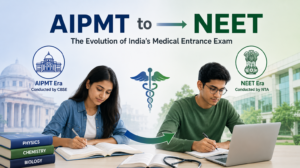
For many years, the All India Pre-Medical Test (AIPMT) was India’s most recognized national entrance examination for students aspiring to study MBBS and BDS. It provided a common platform for medical admissions and helped create a merit-based selection process for government and participating private medical colleges.
As the number of medical entrance examinations increased across different states and institutions, students often had to prepare for multiple exams with varying syllabi and admission procedures. To simplify the process and create a single national standard, All India Pre-Medical Test was eventually replaced by the National Eligibility cum Entrance Test (NEET). Today, NEET serves as the common entrance examination for undergraduate medical admissions across India.
What Was the All India Pre-Medical Test (AIPMT)?
The All India Pre-Medical Test was a national-level medical entrance examination conducted by the Central Board of Secondary Education (CBSE). It was introduced to provide a fair and transparent admission process for MBBS and BDS courses offered by participating institutions across India.
The examination focused on evaluating students’ knowledge of Physics, Chemistry, and Biology. Admission was granted based on merit, allowing qualified candidates to compete for seats in government medical colleges and other participating institutions.
The primary objectives of AIPMT included:
- Creating a common entrance examination for medical admissions.
- Promoting merit-based selection.
- Maintaining transparency in the admission process.
- Offering equal opportunities to students from different states.
Eligibility Criteria for AIPMT
Although AIPMT has been replaced, understanding its eligibility criteria helps explain how the current NEET system evolved.
Applicants were generally required to:
- Complete Class 12 or an equivalent examination.
- Study Physics, Chemistry, Biology/Biotechnology, and English.
- Meet the minimum qualifying marks prescribed for their category.
- Fulfil the minimum age requirement specified for the examination.
Many of these eligibility requirements continue under NEET UG, although candidates should always refer to the latest official notification for current rules.
AIPMT Exam Pattern
The All India Pre-Medical Test followed an objective examination pattern designed to assess a student’s scientific knowledge and analytical skills.
The examination generally included:
- Physics
- Chemistry
- Biology (Botany and Zoology)
Questions were multiple-choice in nature, and candidates were evaluated using a standardized marking scheme. The syllabus was largely based on NCERT textbooks, making conceptual understanding essential for success.
Why Was AIPMT Replaced by NEET?
One of the biggest challenges before NEET was the existence of numerous state-level and institutional entrance examinations. Students often needed to complete multiple application forms, travel to different examination centres, and prepare for different exam patterns.
To simplify medical admissions, India gradually adopted the National Eligibility cum Entrance Test (NEET) as a unified entrance examination.
The transition from All India Pre-Medical Test to NEET offered several advantages:
- A single entrance examination for most medical courses.
- Uniform admission standards across the country.
- Reduced financial burden for students.
- Simplified application process.
- Greater transparency during admissions.
Today, NEET is conducted by the National Testing Agency (NTA) and serves as the gateway for admission to MBBS, BDS, AYUSH, BSc Nursing (for participating institutions), and several other undergraduate healthcare programs.
Students can find official notifications, examination schedules, and application updates through the National Testing Agency (NTA) – NEET UG.
AIPMT vs NEET: Key Differences
Although NEET replaced AIPMT, there are several important differences between the two examinations.
| Feature | AIPMT | NEET |
|---|---|---|
| Conducting Body | CBSE | National Testing Agency (NTA) |
| Admission Scope | Selected medical colleges | Most medical colleges across India |
| Courses Covered | MBBS and BDS | MBBS, BDS, AYUSH, BSc Nursing (participating institutions), and other approved courses |
| Examination System | National entrance test | Unified national medical entrance examination |
| Counselling | Limited participation | Central and state counselling systems |
The introduction of NEET created a more standardized admission process and reduced confusion among medical aspirants.
How NEET Improved Medical Admissions
Replacing All India Pre-Medical Test with NEET brought several improvements to India’s medical education system.
One National Examination
Students now prepare for a single entrance examination instead of appearing for multiple medical entrance tests.
Greater Transparency
A centralized admission process has improved fairness and reduced inconsistencies across institutions.
Better Accessibility
Candidates from every state compete through a common examination, making admissions more streamlined.
Standardized Evaluation
Every student is assessed using the same syllabus and examination pattern, ensuring equal opportunities.
Preparation Tips for Today’s NEET Aspirants
Success in NEET requires consistent preparation and a structured study plan.
Follow the NCERT Books
NCERT textbooks remain the foundation for Physics, Chemistry, and Biology.
Practice Regularly
Solve previous years’ question papers and take mock tests to improve speed and accuracy.
Manage Time Effectively
Develop a realistic study schedule that balances learning, revision, and practice.
Revise Frequently
Regular revision strengthens concepts and improves retention before the examination.
Stay Updated
Always check official notifications regarding eligibility, examination dates, and counselling schedules.
Why Professional NEET Guidance Matters
Qualifying for NEET is only one part of the medical admission journey. Students must also navigate counselling, college selection, documentation, and seat allocation.
Professional NEET Guidance for UG Students can simplify these processes by helping candidates understand counselling procedures, evaluate college options, and complete admission formalities with confidence.
Experienced MBBS Admission Consultants can also assist students in understanding eligibility requirements, counselling rounds, documentation, and available admission opportunities. Whether you require guidance for MBBS Admission Process, NEET Counselling, or personalized MBBS Admission Guidance, expert support can help you make informed decisions throughout the admission process.
Conclusion
The All India Pre-Medical Test played a significant role in shaping India’s medical admission system by introducing a national-level merit-based entrance examination. Its evolution into NEET marked an important step toward creating a more transparent, standardized, and accessible admission process for aspiring medical students.
Today, NEET serves as the single gateway for undergraduate medical admissions across India. With focused preparation, a clear understanding of the admission process, and reliable Medical Admission Consultant support when needed, students can improve their chances of securing admission to their preferred medical college.